AutoSonix PTX™

Every used vehicle is a
question mark.

PTX™ turns it into a
number.

AutoSonix listens to a vehicle, cross-checks what it hears against the car’s own onboard diagnostics and other contextual data, and delivers one objective mechanical score in minutes, at intake, before anyone bids, buys, or underwrites. Think of it as a credit score for the vehicle’s mechanical condition.

AutoSonix PTX™

Every used vehicle is a
question mark.

PTX™ turns it into a
number.

AutoSonix listens to a vehicle, cross-checks what it hears against the car’s own onboard diagnostics and other contextual data, and delivers one objective mechanical score in minutes, at intake, before anyone bids, buys, or underwrites. Think of it as a credit score for the vehicle’s mechanical condition.

What actually happens

From engine sound to score in three steps

Listen

When a vehicle arrives, any team member records it running. No lift. No mechanic. No training. Minutes, not hours.


Analyze​

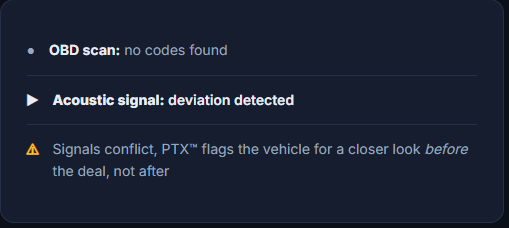
Problems announce themselves in sound long before a sensor files a report. AutoSonix AI converts that sound into data and weighs it against the vehicle’s OBD readings and real-world context. Independent signals, one question: do they agree?

Score

The vehicle gets a PTX™ score from 0–100. High: everything lines up. Low: something doesn’t, look closer before you bid, buy, or underwrite. The score attaches to the vehicle and follows it through every decision.


The DTC gap

No warning light doesn’t mean no
problem.

OBD only reports what a sensor has already caught. Most mechanical wear announces itself in sound first, often long before a code ever sets. That window is the DTC gap, and every intake decision made inside it is a guess.

PTX™ closes the gap. Acoustic AI hears what the sensors haven’t flagged yet. OBD confirms what sound alone can’t know. When the two agree, you know. When they don’t, you know to look.

PTX™ score bands · Plain language. Every time.

What your PTX™ score means.

A PTX™ score isn’t a diagnosis. It’s the starting point every decision has been missing, and anyone can read it.

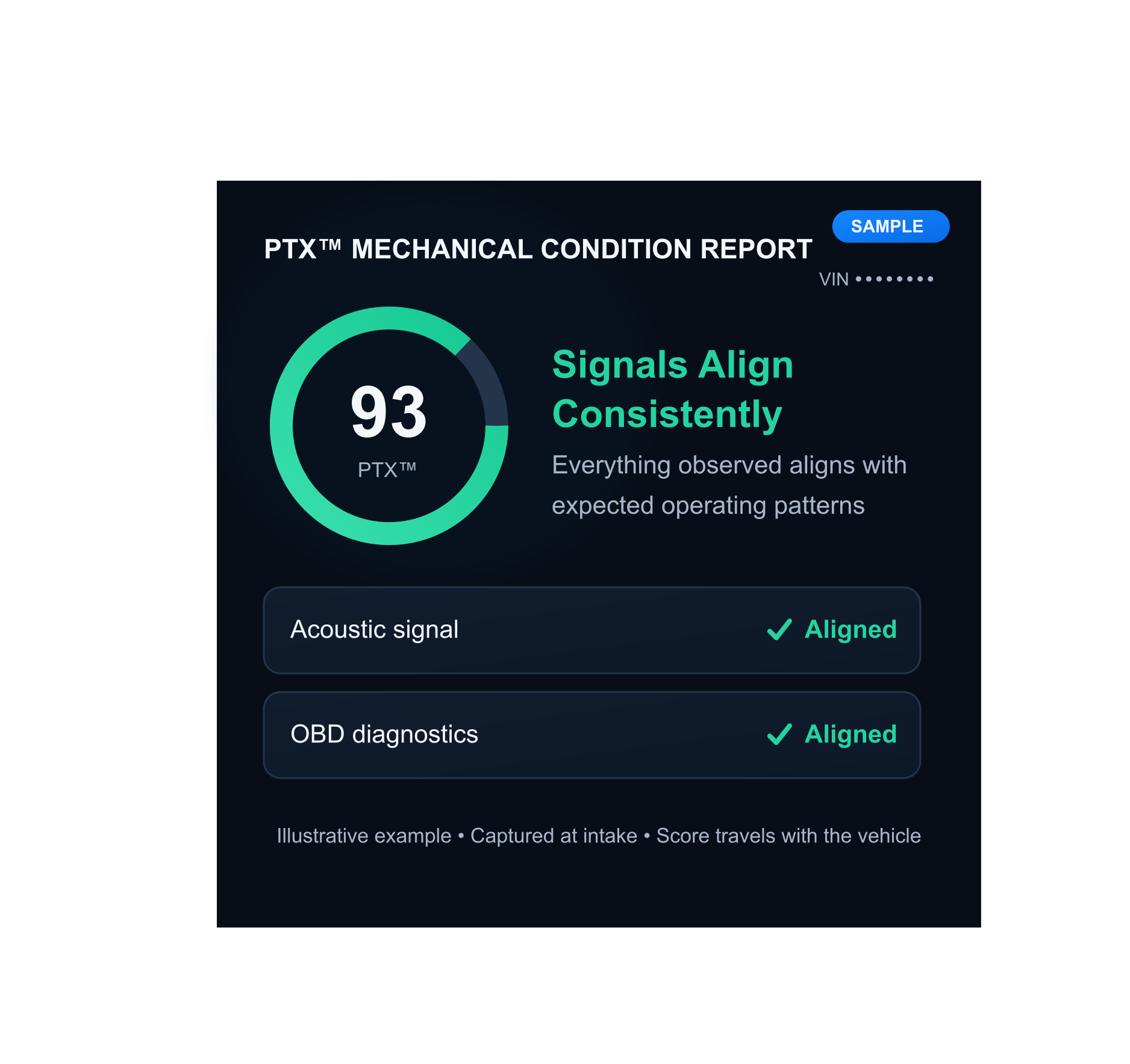
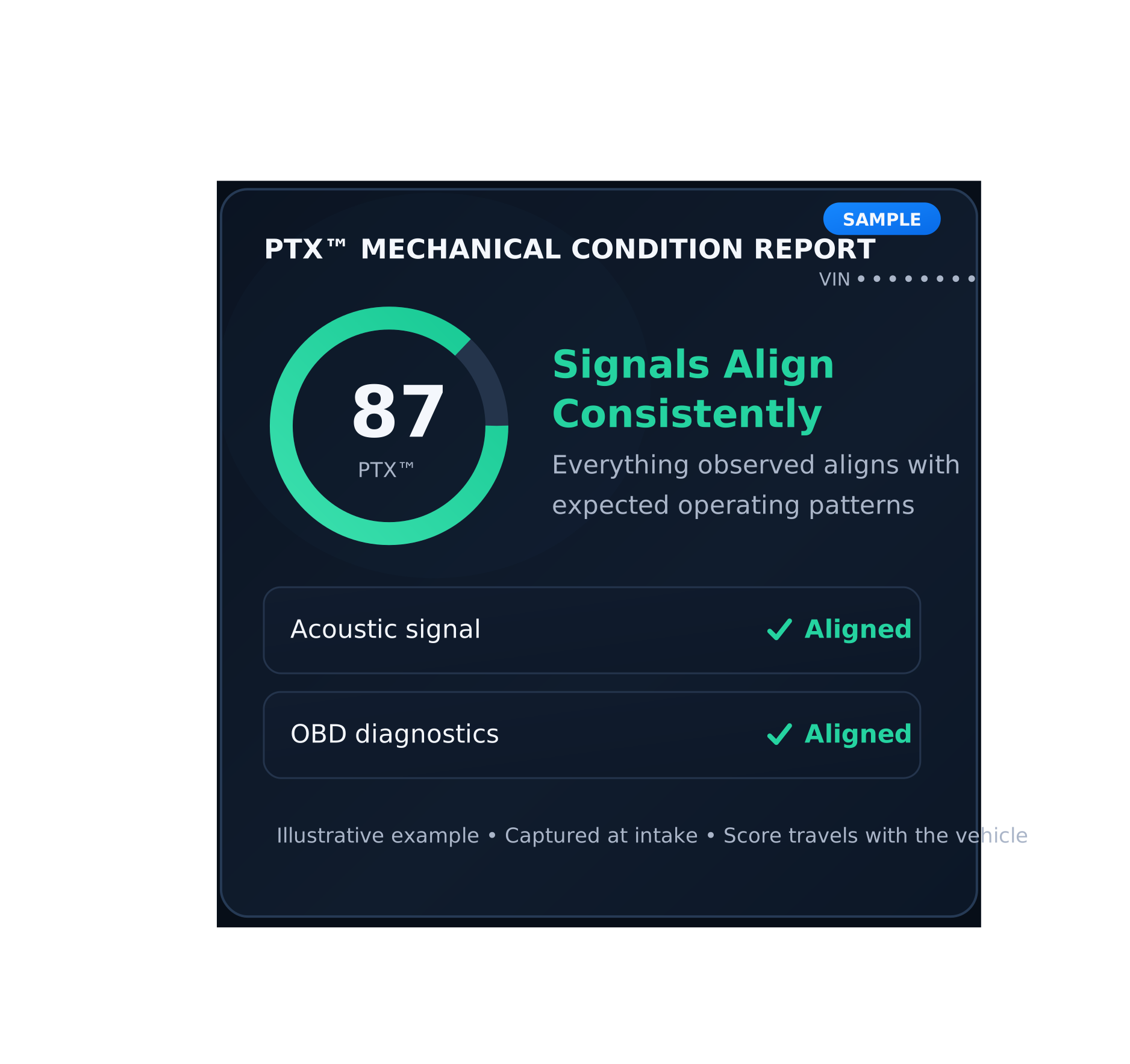
PTX™ 100–90

Signals Align Consistently
Everything observed aligns with expected operating patterns.


PTX™ 89–70

Minor Signal Variance Detected
Some operating signals show mild variance from expected patterns.
 

PTX™ 69–50

Elevated Signal Variance

Multiple intake signals show reduced alignment and may require additional review.

PTX™ 49–0

Significant Signal Misalignment
Several mechanical and operational signals are not aligning consistently.
 
The technology

Sound has always carried the answer. Nobody could measure it until now.

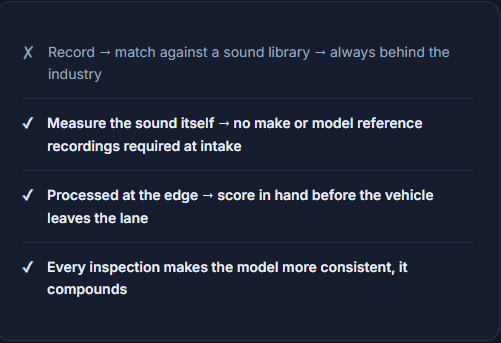
Engineers have known for a century that mechanical sound carries information. Every attempt to use it hit the same wall: comparing recordings against a library of known sounds. The library was always behind, every new make, model, and powertrain needed new reference data.

AutoSonix went around the wall. PTX™ is built on a custom applied AI model, trained on a large proprietary dataset collected from real-world vehicles. It measures the sound itself and cross-checks it with OBD and other vehicle context, so no make or model specific reference recording is required at intake. It is designed to work across makes and models, the same way, every time.

The history report tells you where a car
has been.
PTX™ tells you what shape it’s in right now.

Who it’s for

One score. Every seat at the table.

Auctions & Fleets

An objective mechanical baseline on every vehicle before bidding starts. Fewer arbitration disputes, faster lanes.

Arbtelligence™, PTX for auction and fleet operations

Dealerships & CPO

Every trade-in appraisal becomes a number instead of an opinion. The same number, whoever is holding the tablet.

Trade-In-Telligence™, PTX for the dealership

Banks & Lease

Mechanical condition on the record at intake, documented before the vehicle changes hands.

Portal access at point of underwriting

Warranty Providers

A condition baseline before you accept the vehicle, not after the claim arrives.

Portal access for underwriting teams
Beyond PTX™

PTX™ is the first application. It won’t be the last.

The engine behind PTX™ is a broader capability: turning any mechanical sound into objective, machine-readable intelligence. If it makes a sound, it can be measured.

NVH validation

Buzz-squeak-rattle detection

Component quality control

Manufacturing verification

Fleet condition monitoring

Edge-deployed vehicle intelligence

The next vehicle that rolls in
can carry a score.

See what PTX™ says about a real vehicle, in one demo, on your lot or ours.